

56·
19 days agoImpressive marketing spin on “our product and deployment strategies are wildly insecure.”
Impressive marketing spin on “our product and deployment strategies are wildly insecure.”
Leaders said there was a “robust process” to ensure the contracts align with Google’s AI principles.
Ah, I think you’ve identified their “robust process” and what the key “principles” are.
Yeah, got headhunted for 10 replace-doctors-with-AI startup for every 1 ed-tech company that even looked at my resume, and the company I’m at now, though good on paper, is squeezing AI into every nook and cranny as fast as they can while sidelining security concerns.
For me, it’s more that it’s a vivid image. I have felt that “immiseration” so it immediately resonates; I don’t need a metaphor. But when people who don’t know technology are gushing about the latest agentic process, I wonder if having a somewhat grotesque, embellished counter will be useful.
I clearly need to up my adblock game. But do y’all also use PeerTube, Nebula, Curiosity Stream? Happy to vote with dollars if there’s a good candidate.
Hadn’t heard “precaritized” either. Brings to mind some penultimate additions to pillow forts, though.
We may start to see people realize that “have the AI generate slop, humans will catch the mistakes” actually is different from “have humans generate robust code.”
And how much power does it use?
From the article:
At least seven states with a total of about 35 million registered voters have publicly reported the results of running their voter rolls through the system. Those searches have identified roughly 4,200 people — about 0.01% of registered voters — as noncitizens. This aligns with previous findings that noncitizens rarely register to vote.
And Ars published a piece about it — with AI hallucinated quotes attributed to the human maintainer. They have since retracted it.
I was having a discussion related to this with my team at work: some of them are letting through poorly-reviewed AI code, and I find myself trying to figure out which code has had real human consideration, and which is straight from the agents net. Everyone said they closely review and own all the agentic code, but I don’t really believe it.
Plot twist: the server giving worldwide access to send people electrical stimulation was also implemented by Claude.
Cool use of AI for spelunking, though.
Sounds great. I can’t figure out what the status is. Working prototype? Manufacturing?
You can print on standard sheets or paper rolls and choose between black or color cartridges, refillable at your convenience.
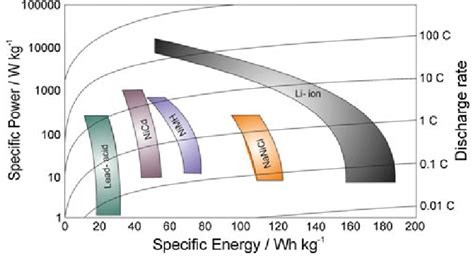
Looks like it’s more like NiMH than LiPo, but higher power than NiMH (which I guess lines up with their claims of charging super fast).
Chatbots are terrible at anything but casual chatter, humanity finds.
The one thing the article doesn’t cover is picking filters. Is there just a number, like N95?
Sounds like the mask might be used for paint/varnish fumes while out of lawless Federal officers’ throwing range.
Illegal in the US sense of “for protesters only but fine for LEOs”?
I found myself baffled as to what the hallmarks of a riot even were. I had thought that a crowd being tear gassed in the dead of night might be similar to a mosh pit at a concert, but riddled with fear instead of elation — a crowd pushing and shoving, overcome with heightened emotion. But I found that the people around me, even when they were screaming and throwing eggs and other produce at the feds, would apologize if they even slightly jostled me. I did worry about being trampled one time, while standing next to an underprepared television crew that had come without gas masks and kept panicking throughout the night. When did a gathering turn into a riot? Were riots even real?
Yeah, insightful writing about something that should be vanishingly uncommon.
I also strongly suspect that the mask is not adequate protection against the particulates in tear gas from a health standpoint — I didn’t have a normal period for six months after the 2020 protests.
Since Donald Trump’s election, Google have moved rapidly to consolidate their position as the primary provider of the infrastructures of surveillance and oppression. In just the months following the inauguration, they have abandoned their pledge to not use artificial intelligence for surveillance or weaponry; they have begun work with US Customs and Border Protection to augment the southern border’s surveillance infrastructure (provided by Elbit) with AI capabilities; they have entered into an AI Lab partnership with Lockheed Martin, to use AI in targeted weapon systems; they have unveiled a collaboration with Palantir to accelerate the deployment of Google Cloud for sensitive government and military applications; and they have provided ICE with data about Palestine activists in the United States.24
Yep. Good work organizing, keep it up!

And if it’s like a lot of security scans, most of the results are technically correct, but, within the context of the project, not something anyone’s going to take the time to fix.