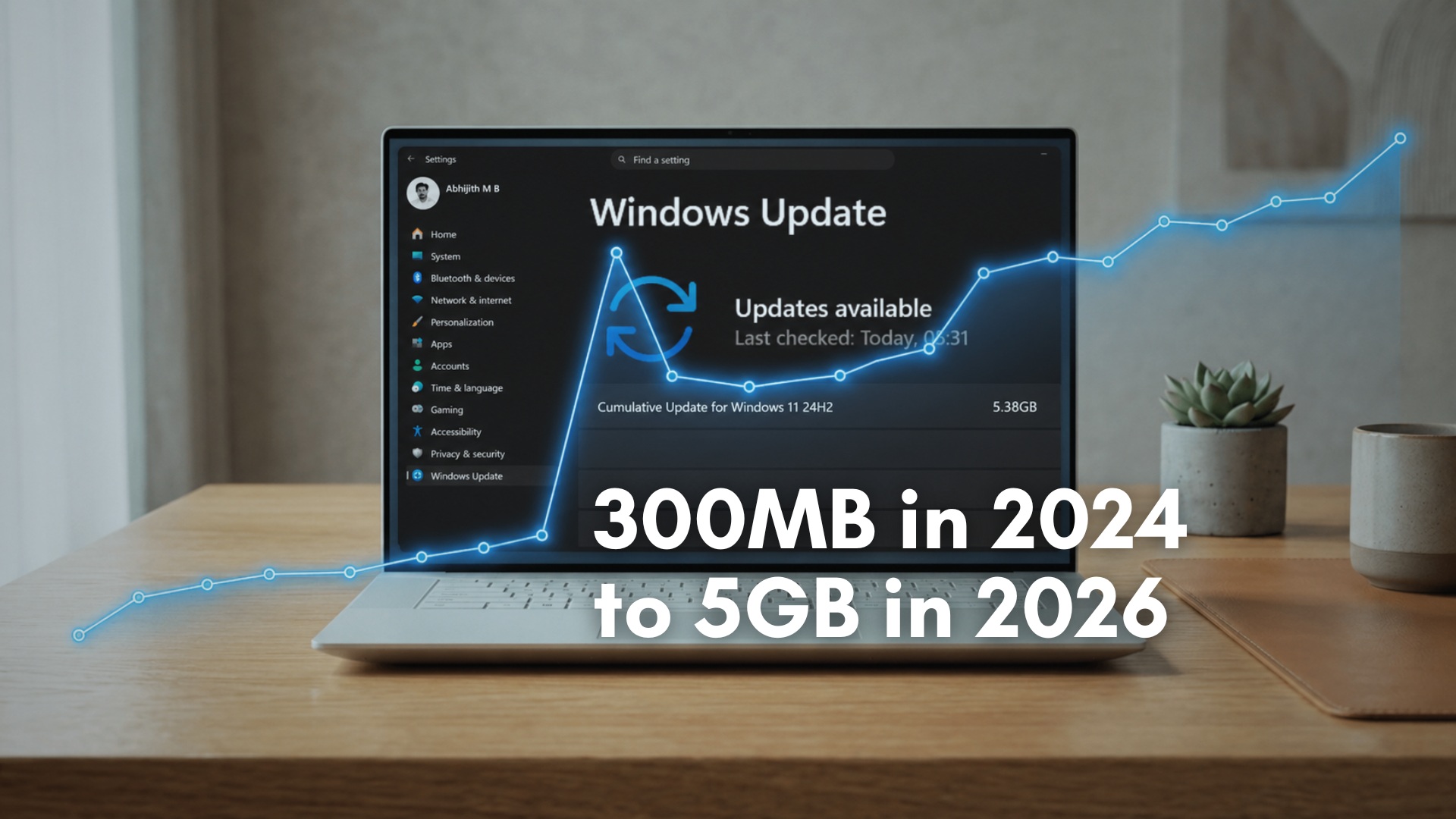
The “Any day now” just keeps holding hopeium and copeium. They dont have to deliver if any day is a phrase that keeps people putting off switching.
Side note to any power users that are planning on making the switch that I wish I knew back when I switched. (Types that really want a system thats theirs and dig in) don’t start out with a “user friendly distro” go straight to a main bloodline distro like Arch or Debian. Chances are you’ll end up on one anyway and it’ll save you time distro hopping.
Was the article written by AI?
Windows is bloated, always has been. Everytime you install an application you are installing another copy of all the libraries that program uses.
I think now that precompiled binaries for Linux systems are becoming more popular, they will also start to suffer from bloat as well. While the universal nature of SNAPS makes them useful, they will inherently take up a lot more space.
Of course the big difference between the two update systems currently is most Linux systems can update all their programs together. I have always found using repositories way better than hunting down updated packages in Windows or having to let each program individually update itself.
Windows is not bloated! I’m sure windows XP is smaller than debian!
The first half of the article is just going in circles. Like a llm repeating it self.
The second half could be written in a sentence.
Yep, it’s LLM-generated.
So what you’re saying is… AI is part of the problem, like the headline says 😂

Anybody got the other one as well? Where it’s staring bewildered with a raised eyebrow?
Oh μ$lop is the best advertisement for Linux
I love how Microsoft promised to cut down on mandatory updates with K2, and then decided to push several more months’ worth of mandatory, massive, device-breaking updates before K2 even starts. They shouldn’t have made the announcement until they were ready to commit.
Edit: the K2 promise was March 20.
The K2 results are “any day now.” Allegedly some people can already
permanently disablekeep re-pausing Windows updates. So little so late.They shouldn’t have made the announcement until they were ready to commit.
They should print this in bronze and mount it in their boardroom because the present day reputation of Microsoft is that releasing half baked shit that they need to abandon or rebrand later is all that they do.
I would pin that on a lot of companies’ boardrooms
You’ve got to load up on all your favorite foods the day before starting your diet.
Windows updates are large because they’re built to work everywhere, on every configuration, for every enterprise scenario.
Kind of seems like it’d work better if your PC contained a numeric code. That code would contain everything the update service needs for your specific computer.
For example. If your computer has a display out, it might add 855. And if your display has a touch screen it might add a 99. So now you have 85599. And when your PC sends 85599 to the update service it knows to include all updates with 85599.
But if my pc has a display out, but NOT a touch screen I would only have 855. I would not have 99. So I wouldn’t get the touchscreen updates.
Now do this for every single piece of tech a computer might have an update for. If you have usb 2.0, you might get 122. But if you have usb 3.0 you might get 133. And if you have usb type c, you might have 177. Or maybe you have usb 2.0, 3.0 and type c. So you’d have 122133177.
Yes, the number would be quite long, but you’d never need to see or interact with it. It’s just a small txt file that windows would send to its server to prepare the relevant updates.
I imagine that cutting down useless bloat would be beneficial for everyone. For example, if I’ve never used Turkish language, then I could skip 1.2GB of download for downloading the Turkish dictionary.
Why don’t they do it like that?
They do; the article points that out.
However, this doesn’t work in enterprise environments. Companies want to download updates once and then deliver then themselves when and to whom they want. And that means they need to download all of them.
These days they’re all bundled up in one huge package so companies have to devote a of storage for update files that mostly contain the same stuff as last month’s.
RigI nean, yeah, the rest is Windows…